
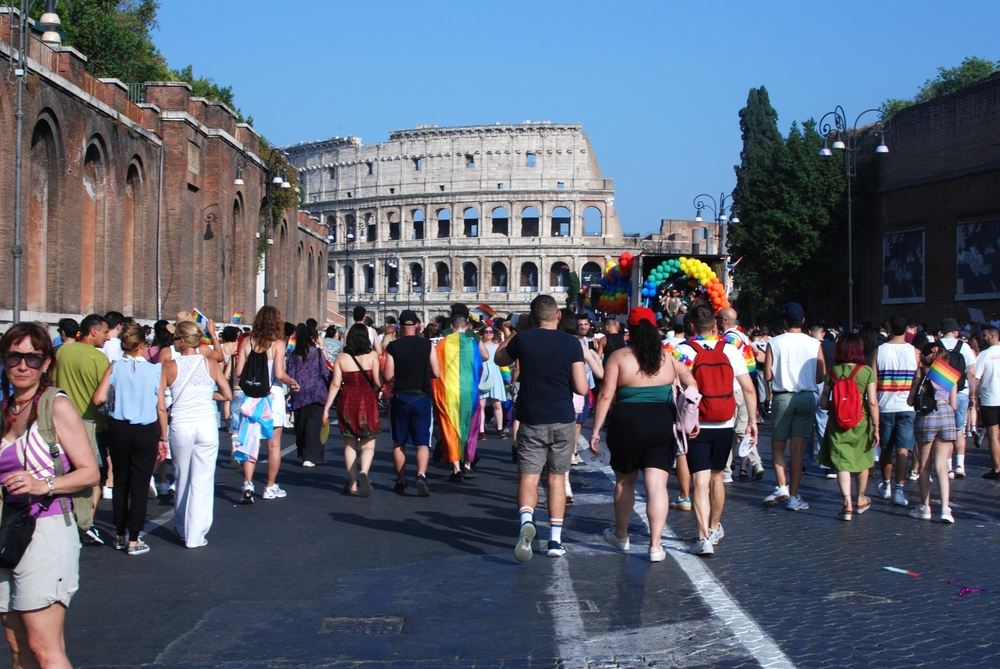
The exclusion of the Jewish LGBTQ group Keshet from Roma Pride quickly turned into an interpretive conflict. The issue is not only who is allowed to march, but also what it means to “belong” to an inclusive demonstration, both in statute and in practice. All accounts agree on one point: The decision is not solely a problem of logistics or internal rules, but rather, the result of an implicit or explicit standard of political compatibility. The transition from organizational selection to evaluation of collective identities is never neutral, even when presented as such. The involved association claims a clear distinction: their nature is that of LGBTQIA+ Jewish groups, not political groups or individuals linked to state institutions in the Middle East conflict.
On May 31, the debate reached Europe’s institutional circles as well. Katharina Von Schnurbein, the European Commission Coordinator on combating antisemitism and fostering Jewish life, strongly condemned the decision in a LinkedIn post. “Excluding #Jewish #LGBTQI+ people from Pride events undermines the values that Pride claims to defend: inclusion, equality, and solidarity. Today the Jews — who will be next? It’s a slippery slope,” she wrote.
Von Schnurbein recalled that “non-discrimination is a core principle of EU fundamental rights and essential for protecting human dignity, equality, and social inclusion. The Charter of Fundamental Rights of the European Union therefore prohibits discrimination based on sexual orientation, religion, gender, race, ethnic origin, disability, age, and other protected grounds.”
Expressing her support for Keshet Italia, she asked the organizers of Roma Pride to reconsider their decision and uphold “the principles of inclusion and equal rights for all.”