
From Loevinson to Finzi: New Stumbling Stones Installed in Rome
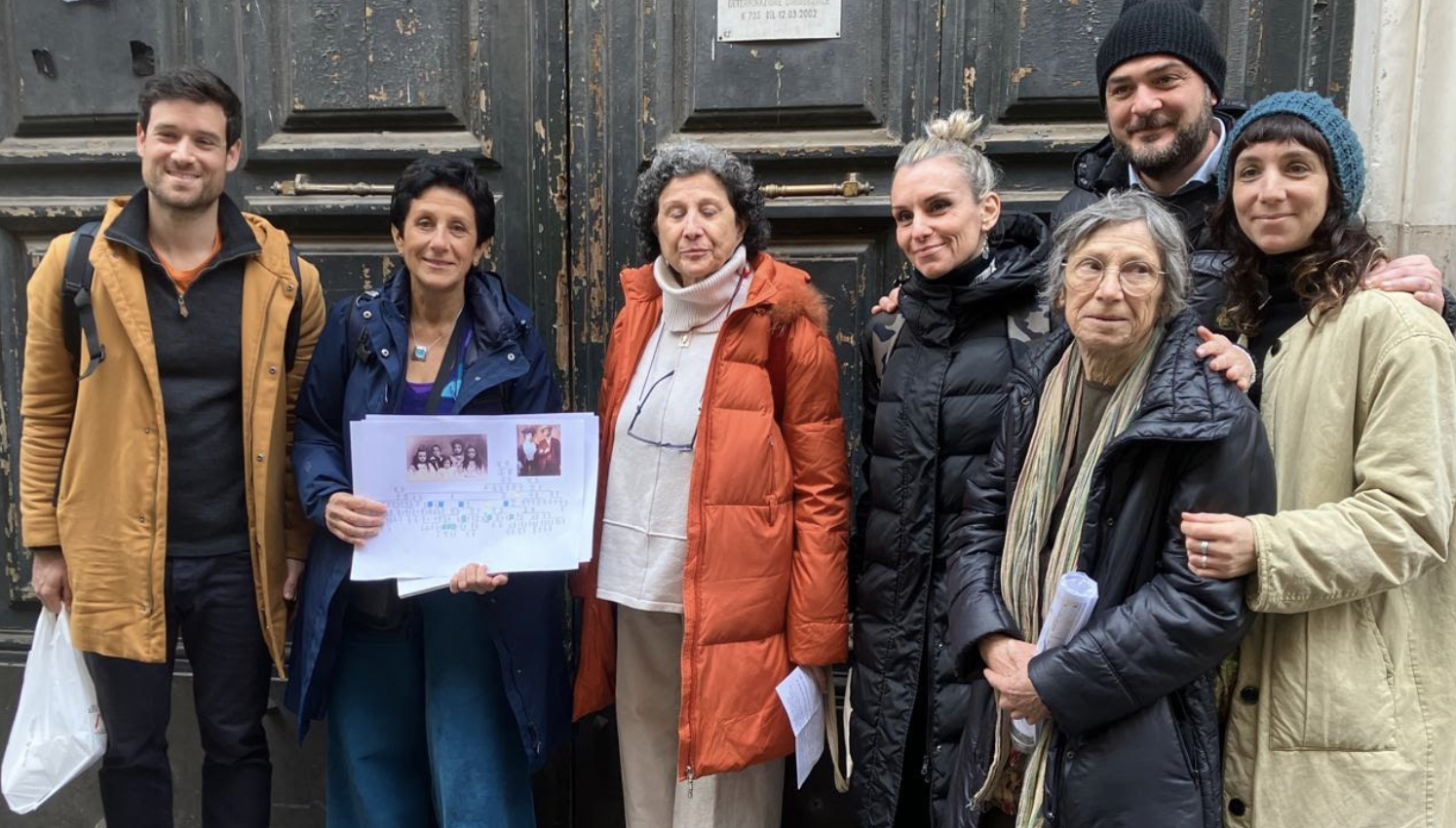
Since 2010, Rome has faithfully maintained a tradition observed every January, the month dedicated to Holocaust Remembrance. During this time, new Stolpersteine, meaning “stumbling stones,” are placed to honor the memory of victims of Nazi-Fascist persecution. Designed by Berlin artist Gunter Demnig, Stolpersteine are small cement blocks with brass plates engraved with biographical information about the victims of Nazi-Fascist deportations. The stones are placed in front of the victims’ last known homes.
Numerous ceremonies took place on January 15 and 16. The initiative was promoted by Arte in memoria (Art in Memory), an association led by architect and art historian Adachiara Zevi. Zevi was the first to bring the Stolpersteine to Italy. The initiative was supported by the UCEI and the Jewish Community of Rome, and took place under the high patronage of the Italian Presidency.
The Stumbling Stones are dedicated to Jews and anti-fascists. They commemorate individual lives cut short and entire families sent to their deaths. This year, Stolpersteine were placed in many neighborhoods to provide a broader perspective on those tragic months. One stone was laid in memory of Ermanno Loevinson. A German archivist and historian, he was born in Berlin in 1863. He, his wife Wally Buetow, and their son Sigismondo were killed at Auschwitz.
Loevinson, the director of the State Archives of Parma (1927–1930) and later of Bologna (1930–1934), was a scholar of the Jewish contribution to the Italian Risorgimento. He wrote about the history of Roman and Italian Jews in various publications, including German ones. The Loevinson family ceremony took place at 38 Via di Porta Maggiore and included the laying of other stones. Associations and school groups participated in the event.
Another highly anticipated ceremony was dedicated to Giovanni Frignani. A Carabinieri officer, Frignani was responsible for the arrest of Benito Mussolini after the Fascist Grand Council voted on July 25, 1943. This arrest ended Mussolini’s nearly 21-year rule as Italy faced military disaster from the Allied invasion of Sicily. Born in Ravenna in 1897, Frignani joined the Italian Resistance in the Clandestine Military Front, led by Colonel Giuseppe Cordero Lanza di Montezemolo. This group consisted largely of Royal Italian Army officers who had gone into hiding after the Germans captured Rome.
Frignani was killed in the Fosse Ardeatine Massacre on March 24, 1944, a mass killing of civilians and political prisoners carried out by German occupation troops as a reprisal. He was posthumously awarded the Gold Medal for Military Valor. His Stumbling Stone was placed at Via Panama 114.
Hundreds of Stolpersteine have now been installed throughout Rome. Since 2010, Arteinmemoria’s work in Rome has set an example for the rest of the country, encouraging other administrations and associations to follow suit. Zevi addresses this in a recently published book. Titled Artisti e architetti alla prova dello spazio (Artists and Architects Dealing with Space), the book was published by Donzelli. The book includes a reflection on urban spaces of remembrance as part of a broader discussion on art and architecture. The aim is to identify “the prerogatives of the individual disciplines” without confusing their roles. As Zevi emphasizes, architecture is not merely a function, as many artists believe. And art is not mere decoration, as many architects hope.” The author applies this concept to places of remembrance in Rome and elsewhere. Examples include the former Nazi prison in Rome on Via Tasso and the memorial commemorating the 335 victims of the Ardeatine massacre.
Translated by Matilde Bortolussi and revised by Alessia Tivan, students at the Advanced School for Interpreters and Translators of the University of Trieste, trainees in the newsroom of the Union of the Italian Jewish Communities – Pagine Ebraiche.