
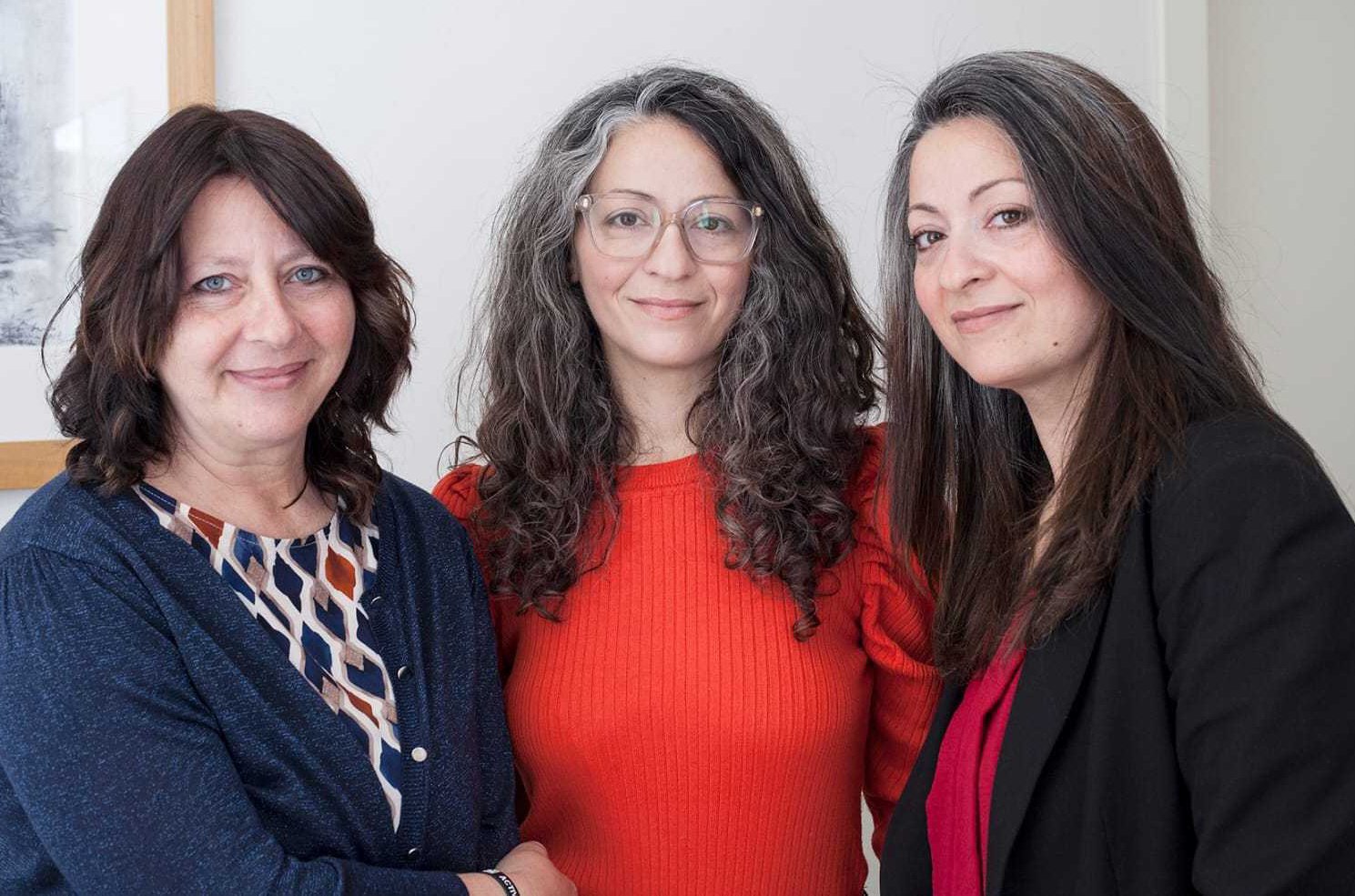
Settimia Spizzichino was the only woman to survive the Nazi roundup of Rome’s Jewish ghetto on October 16, 1943. Rivka, Grazia, and Sara Spizzichino are three sisters from Rome. They are Jewish and descendants of Settimia. Because of their family connection, the sisters helped establish the association Ricordiamo Insieme (Let Us Remember Together), founded by the German couple Friederike and Tobias Wallbrecher.
The project emerged from the intersection of two contrasting family histories. On one side is the story of those who suffered the Holocaust. On the other, there is the story of those who actively participated in it. One of Friederike’s grandfathers belonged to neighborhood groups that hunted Jews and their rescuers in Nazi Germany.
The association aims o address trauma from different perspectives. One of the most important events in its annual activities is the commemoration of the roundup that occurred in the courtyard of the former Military College in Rome. Today, the site is the Centro Alti Studi per la Difesa of the Italian Army. This event has long been one of the central commemorations in the October 16 memorial calendar.
The three sisters’ efforts have been honored with the Order of Merit of the Federal Republic of Germany. The award was presented on May 13 at Villa Almone, the official residence of the German ambassador in Rome. “We are very honored,” said Rivka, vice president of Ricordiamo Insieme. “Unfortunately, this is a very difficult time for those of us working on issues like ours, marked by a troubling resurgence of antisemitism. More than its overt manifestations, which institutions are equipped to combat, I am most concerned by its subtler, unspoken forms.”
She explained that the recognition comes at a difficult time for her family as well. “In September, we lost our father, Mario. However, in October, we honored our commitment to remembrance. We feel we have a responsibility. Unfortunately, all of this is happening while a growing number of teachers and schools have turned their backs on us.”
This issue was raised during the last commemoration. It was also highlighted through an artistic protest installation featuring many empty chairs and one question: “Where are the people we believed were our friends?” Although “we have lost some people along the way,” the German honor “gives us back some motivation.” Her sister Sara, who created the installation, agreed. “It is meaningful that this award came from Germany, especially considering Ricordiamo Insieme’s origins. With those empty chairs, we wanted to show an absence that we feel deeply and painfully. Since then, that wound has grown even larger, spreading like oil.”
However, there are positive signs on the horizon as well. One example is the creation of a foundation that, as Rivka explained, “will form the basis of the documentation center we will soon open in Via Domenico Silveri in Rome.””We will promote Memory initiatives. We will bring historians together with school and university students. We will promote internships and training opportunities. For the management of the archive, we are counting on the collaboration of retired teachers.” One of the foundation’s main focuses will be analyzing the roots of antisemitism and anti-Judaism. This is because, as the foundation explains, “people often express themselves through antisemitic codes without even being aware of it.”
Photo: The Spizzichino sisters. From left, Grazia, Sara and Rivka)
a.s.
Translated by Elizabeth El Khoury and revised by Caterina Mansani, students at the Advanced School for Interpreters and Translators of the University of Trieste, trainees in the newsroom of the Union of the Italian Jewish Communities – Pagine Ebraiche.