
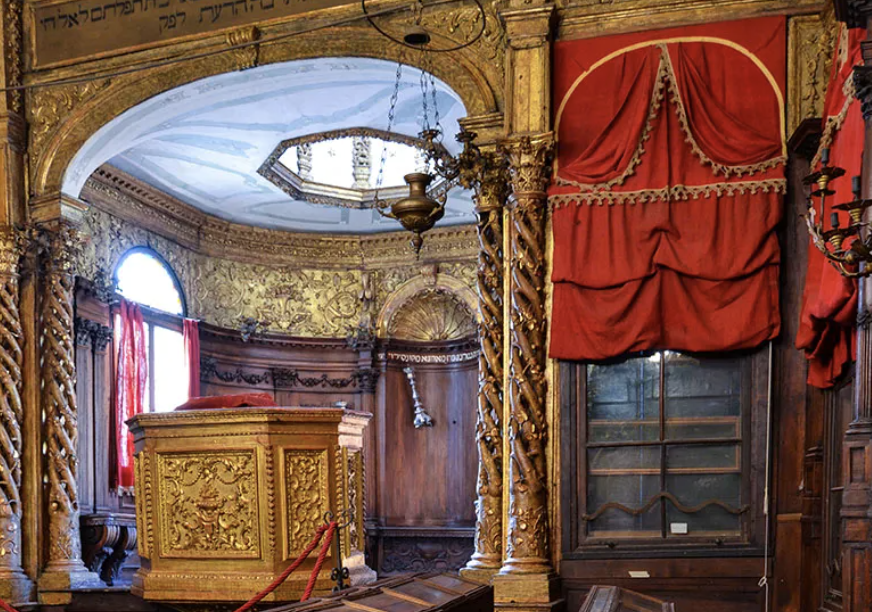
After six years dedicated to the “restoration, expansion, and modernization” of the building, the Jewish Museum of Venice will reopen to the public on Thursday, October 22. The museum aims to serve as “a symbol of renewal and moral revitalization.” Dario Calimani, president of the Venetian Jewish Community, announced the reopening to Pagine Ebraiche. The plan is in place: a press conference is scheduled for Tuesday, October 20; two inauguration ceremonies with institutional representatives are planned for Wednesday, October 21; and the museum will open to the public on Thursday, October 22. “These have been years of intense effort, and we are now nearing the finish line. We’re working day and night to complete what’s still missing,” the president explained. He is the driving force behind a “wide-ranging” initiative that has received funding from the Ministry of Culture and “major international donors” over the years. These funds have enabled the restoration of three 16^(th)-century synagogues in the Ghetto: the Scola Grande Tedesca, the Scola Canton, and the Scola Italiana. They have also funded projects aimed at revitalizing the site and making it more accessible to the public. The goal is to “celebrate a glorious history that we cannot simply honor and commemorate, but from which we must draw inspiration in the present.” According to Calimani, “We do not always realize what Jewish Italy once was. Because of this, we end up setting small goals instead of grand ones.” This initiative, he argues, “is, on the contrary, a message of presence—and of ‘present’ presence—for us as well” and demonstrates Venetian Judaism’s ability “to survive and resist antisemitism and ongoing conflicts, sometimes even internal ones.” Calimani continues that the museum is the cornerstone of a revitalization project encompassing the entire Ghetto area. The intention is “to make it an increasingly ‘vibrant’ place: hence the investment in the restaurant, the hotel, and a new bookstore.” The next restoration projects will focus on the other two synagogues: the Levantine and the Spanish.
(In the image: a detail of the Scola Canton)