
Noemi Di Segni (UCEI): Jews Feel Isolated, Anti-Hatred Laws Need Update
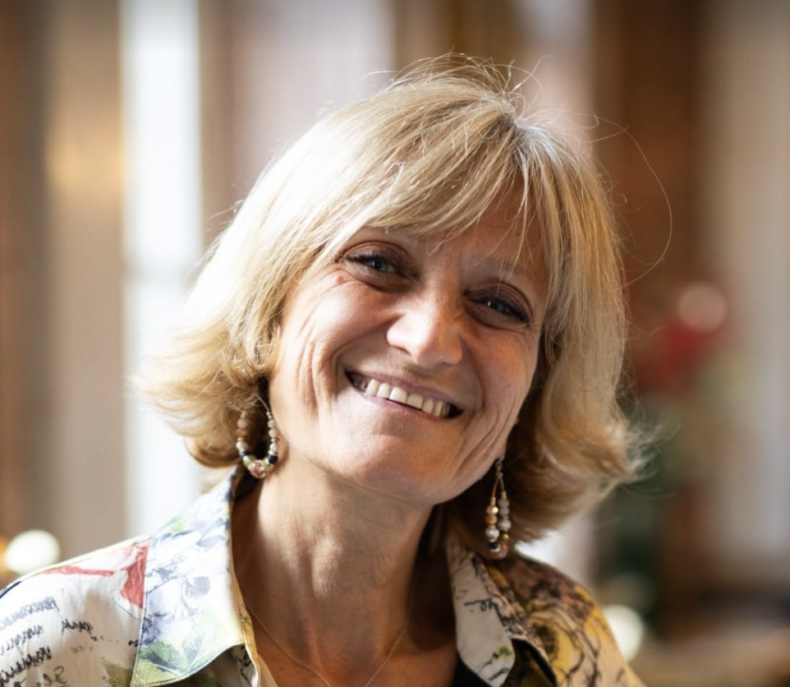
With the elections to renew the UCEI council having just concluded and her term as president of the Union of Italian Jewish Communities (UCEI) about to end, Noemi Di Segni addressed various current issues in a year-end press conference at the National Library of Italian Judaism in Rome.
First and foremost were the rise of antisemitism, the media distortions surrounding Israel and the Middle East, and the challenge of cultivating a conscious Memory.
Di Segni denounced what she called “the total abuse” of memory taking place in many areas of Italian society. She referred to the use of words linked to the Holocaust, which are now being taken and turned against Jews and Israel. Looking ahead to Holocaust Remembrance Day on January 27, she added, “There is a worried mood, a heavy atmosphere. The desire is to protect those who are targeted — Senator Liliana Segre, as well as every Jew.”
Addressing anti-Jewish prejudice, Di Segni said that the tools to combat it “are insufficient and must be improved alongside the development of education, civic awareness, and memory awareness.”
She believes that the debate on Senator Delrio’s bill on antisemitism should be directed “to the Senate’s Constitutional Affairs Committee. ” Di Segni also reminded that the IHRA definition of antisemitism is a “working tool, not a legal text to be copied and pasted into a law.”
She emphasized the need to update judicial norms because “reality has surpassed anything imaginable at the time those norms were conceived.” Di Segni then addressed the more than 50 complaints filed by UCEI against “very different individuals in all kinds of situations.”
According to Di Segni, the prevailing feelings among Italian Jews today are isolation and uncertainty. “It is not the fear of a bomb exploding. Jews today feel isolated. They feel they are no longer part of a context that once offered certainties and reference points, even in informal situations.” “Jews are not believed, while what others say is always true. It is a black hole that we cannot come to terms with: it is antisemitism; it is prejudice.”
Di Segni described “a worrying reality with certain organizations financing, empowering, and giving voice to students, organized groups, activists, and some religious clusters.” However, she added that “some journalists, TV networks, and media platforms also benefit from this dynamic.” The outgoing president also explained her choice not to run again for any UCEI role after serving for nine and a half years and as budget assessor for four years under Renzo Gattagna’s presidency. “This is not a step back, but a step forward to move in other directions,” she said. She announced her intention “to provide support within the international organizations in which we have established ourselves as the UCEI.” Regarding external relations, she said that she worked with her interlocutors “to represent the diversity of voices and perspectives within Italian Jewry while maintaining clarity and firmness regarding our values.” Regarding internal dynamics, Di Segni said “she worked to make the Union transparent through seriousness, rigor, and better management practices.”
Many of these themes were echoed by Jona Falco. The outgoing UCEI councilor for Communication stated that Jewish and community institutions “live today under escort,” and this is a problem not only for Jews but also for the Italian society as a whole. From this perspective, he said, “We would like Italy to react to indifference.”
Jona Falco added, “We are, and we feel deeply Italian. What we hope for is that each of us can work toward a future Italian society in which fascist-style episodes can be countered.” He highlighted the work carried out by UCEI during the outgoing term. “UCEI is now regarded as a serious and reliable partner. The period now ending has been marked by efforts to promote unity beyond differences.”
Translated by Alessia Tivan and revised by Matilde Bortolussi, students at the Advanced School for Interpreters and Translators of the University of Trieste, trainees in the newsroom of the Union of the Italian Jewish Communities – Pagine Ebraiche.