
Segre Reinach: “In Esther’s Tapestry Her dress Speaks the Language of Power”
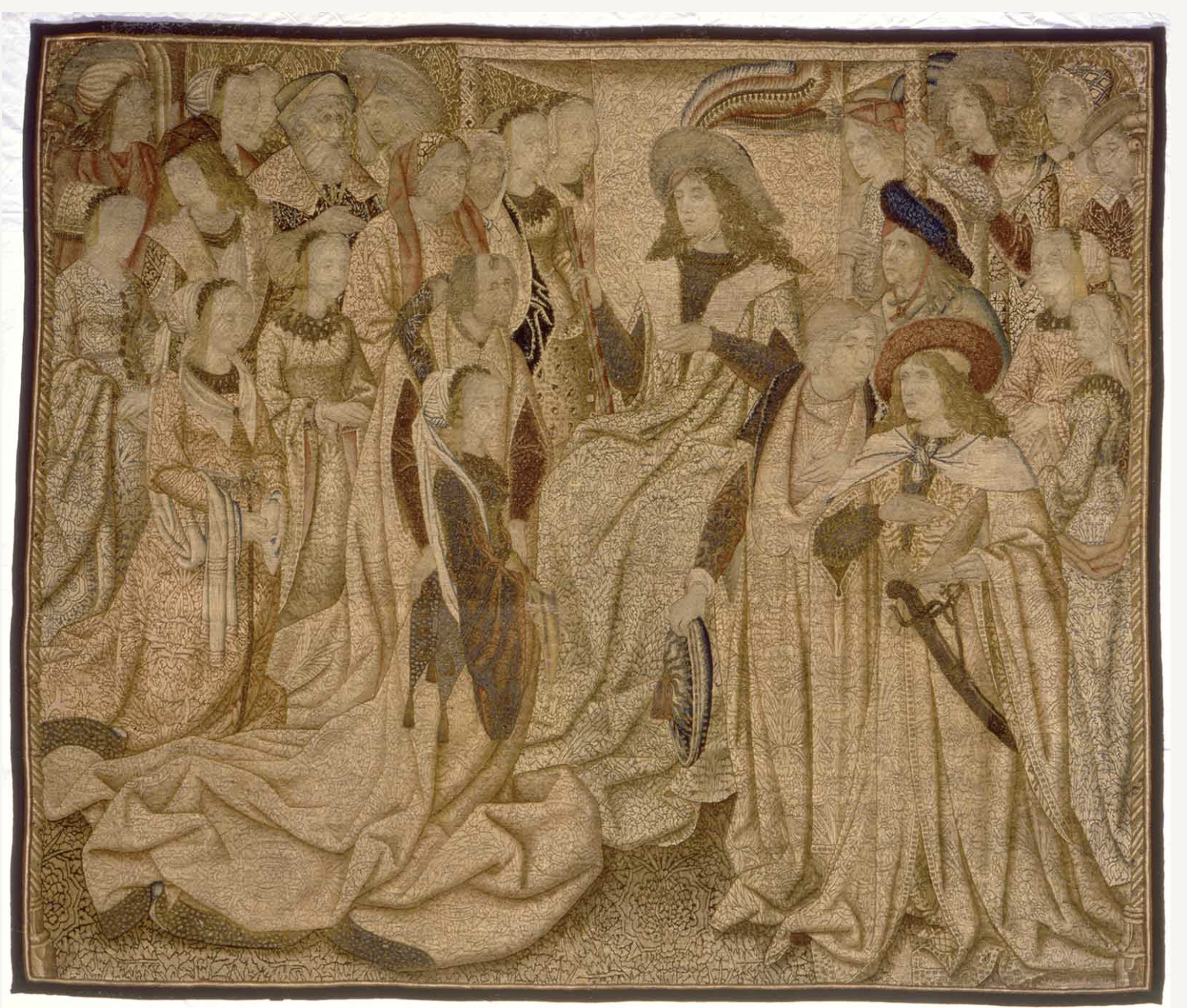
“In this tapestry, the dresses are not just decorative elements; they speak the true language of power and identity.” According to Simona Segre Reinach, a fashion anthropologist, Esther is Presented to Ahasuerus is above all “an extraordinary textile mise-en-scène,” a work in which material establishes hierarchies, roles, and transformations. From February 26 to April 26, the Flemish tapestry, woven in Brussels at the end of the 15th century and beginning of the 16th century with wool, silk, and metallic threads, will be on display at the Shoah Memorial in Milan. It will be in dialogue with a place that symbolizes Nazi-Fascist persecution. Coming from the Poldi Pezzoli Museum in Milan, the work of art depicts the moment Esther introduces herself to King Ahasuerus to intercede on behalf of the Jewish people who are threatened with extermination. Four in-depth videos will guide visitors through the exhibition. The video by Segre Reinach interprets the tapestry through the lens of the dresses.
“We are in the middle of a refined aesthetic transition,” she explains. “In Northern Europe, Late Gothic elements persist with full surface, widespread wealth, and the ornament occupying each space. However, a new attention to bodies and harmony is beginning to emerge as a result of communication with Italy and the Burgundian court culture.” Merchants travel, textiles circulate, and decorative motifs transform. “From Italy to Northern Europe, brocades and elegant models spread as reinterpreted impressions, even of elements considered Oriental.”
Esther
Esther, kneeling before the sovereign, is absorbed in what Segre Reinach defines as “a forest of fabric.” Her train seems to create an island around her. Wide sleeves and layered materials with precious details build a dress that looks like “armor.”
The golden brocades emulate stylized floral motifs, such as the pomegranate, which is considered to have Oriental origins. These motifs were elaborated upon in Italy and exported to Northern Europe. The visible interiors of the fabrics reveal wealth and formal control. “It is a very restrained femininity,” notes the anthropologist. “Esther is kneeling, but she is not weak. Her dress supports her and gives her structure. She is a woman who guards a secret, and through her measured gestures and hairstyle ritual, she presents herself to the king appropriately.” The hairstyles refer to Italian and Spanish models, and the shaved foreheads in the Northern European style indicate status and bodily discipline. Every element contributes to defining social position and intelligence.
Ahasuerus
Ahasuerus also participates in this theatricalization of power. “He is dressed spectacularly,” emphasizes Segre Reinach. The peacock feathers declare magnificence, and the shaved face and curly hair correspond to a contemporary ideal of male beauty. Broad shoulders create an almost geometric figure, already Renaissance in style. “He could be mistaken for a Duke of Burgundy.”
The two characters are complementary. While Esther transforms a position of apparent vulnerability into strength through her attire, Ahasuerus embodies a sovereignty constructed through images. “Here, the form is highly elevated and controlled,” concludes Segre Reinach. “We are not merely facing a late Gothic work; we are witnessing a unique moment in which clothing becomes a symbolic device and a tool of representation and relationship.”
At the Shoah Memorial, this visual richness enters a space of memory, opening a reflection that spans centuries and languages, the anthropologist emphasizes, from the magnificence of textiles to the responsibility of Esther’s choice.
Translated by Caterina Mansani and revised by Elizabeth El Khoury, students at the Advanced School for Interpreters and Translators of the University of Trieste, trainees in the newsroom of the Union of the Italian Jewish Communities – Pagine Ebraiche.