
From Mud to Beauty, Farewell to Kibbutz Architect Vittorio Corinaldi
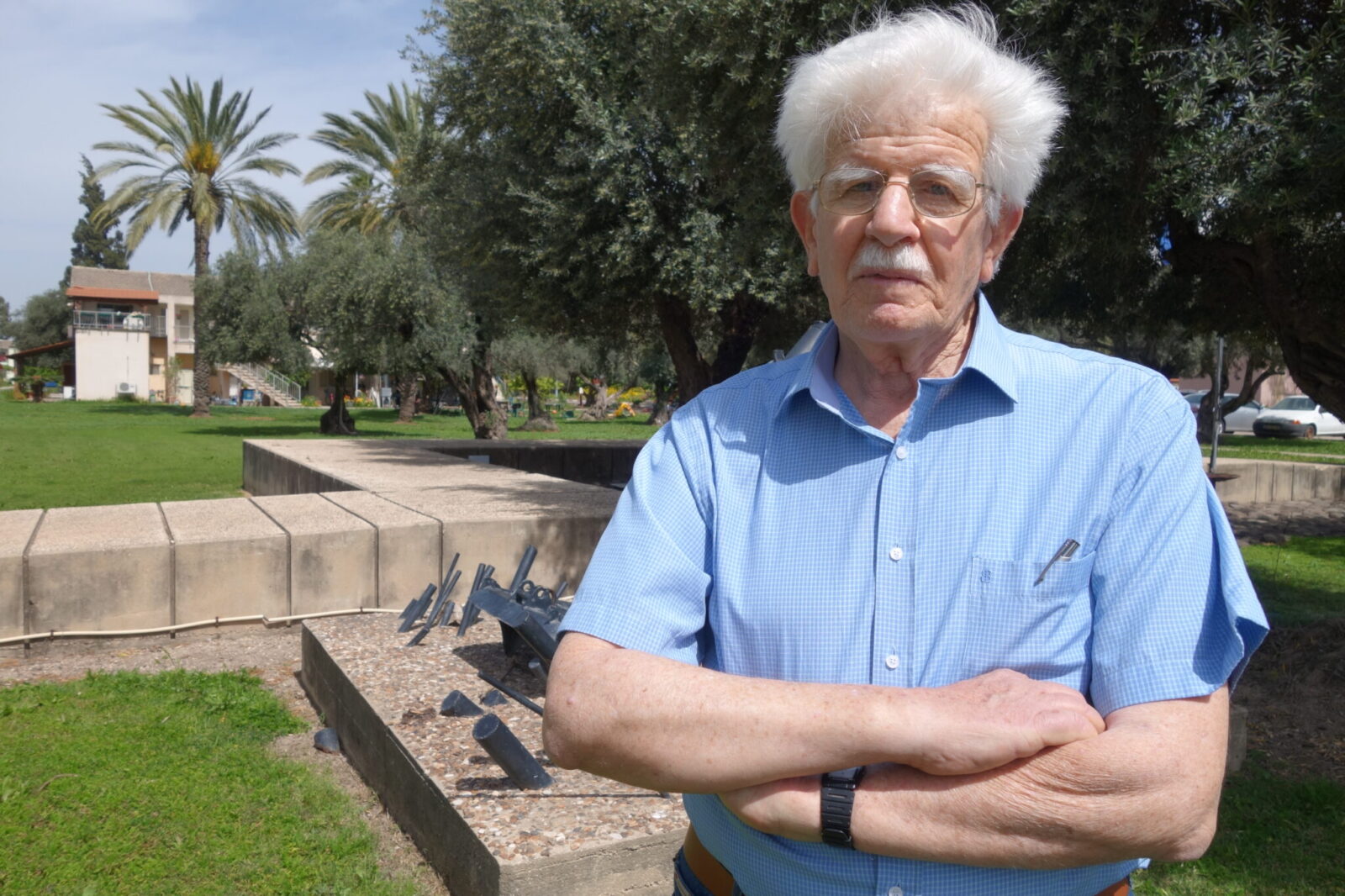
When Vittorio Corinaldi arrived at Kibbutz Bror Hayil in the 1950s, he found little more than an encampment. “There was almost nothing,” he recalled many years later. “There was a poor camp of barracks and a few residential buildings. There were no sidewalks, and the mud was unbearable during the winter. There were no services or trees.” His Israeli story began in this desolate landscape. Corinaldi was born in Italy, escaped to Brazil, and finally settled in Israel. He died there last week at the age of 94. Starting in the 1950s, he designed dozens of buildings in kibbutzim across the country. Although he remains unknown to the general public, the Israeli outlet Ynet remarked that Vittorio Corinaldi was “maybe the most important Israeli architect of whom Israelis never heard.” His style is prevalent in kibbutzim, evident in collective canteens, schools, and facilities that reflect the communal and collaborative spirit typical of kibbutzim.
Corinaldi was born in Milan in 1931 to a middle-class Jewish family. His father, Adalberto, worked as an executive for Assicurazioni Generali, and Corinaldi grew up in a wealthy environment fully integrated into Italian society. All of this changed in 1938 when the fascist regime adopted racial laws. Vittorio and his sister Elena were expelled from public school and had to enroll in a school established by the Jewish community for Jewish teachers and students. The following year, as the fascist regime’s antisemitic policies worsened, the family left Italy.
Although the Corinaldis were fervent Zionists, reaching Mandatory Palestine was nearly impossible due to the British restrictions on Jewish immigration, as Vittorio recounted. Thus, in June 1939, the family set sail for Brazil. “To us kids, it seemed like a leisurely cruise,” Corinaldi told Ynet. “Many years later, we realized the burdensome worry that marked our parents’ decision.”
The family settled in São Paulo, where Vittorio grew up and trained to be an architect. It was a time of great cultural and urbanistic change, and the Brazilian atmosphere left a deep mark on his style. In Israel at the time, brutalism was often associated with exposed cement, but Corinaldi’s education in São Paulo brought him to a rather different approach. He used materials in their natural state, with no superfluous finishes, allowing the buildings’ structures to speak for themselves.
Following his family’s Zionist commitment, he moved to Israel. He and his wife, Yaffa, arrived in 1956. They settled in Bror Hayil, a kibbutz founded by Brazilian immigrants near the Gaza Strip. There, he immediately became involved in construction and planning initiatives. The Jewish Agency, which financed the projects, imposed a standard model. Corinaldi considered them “very bad and without grace.” Thus, he began modifying and adapting the projects to the landscape and the community’s needs. His architectural philosophy was sober and connected to collective life. “I have always tried to explain to the members of the kibbutz that we don’t just deal with functional aspects. We create culture through everything we do,” he wrote. “I think I have been able to generate an interesting dialogue with the kibbutz with which I worked.”
Over the past few decades, the architect of the kibbutz became disillusioned with the evolution of the community, which was originally inspired by Zionist and socialist ideals. He was deeply disappointed by the privatization process and lifestyle changes. “I am not an ideological fanatic, but to me, the kibbutz had a uniqueness that has been lost,” he explained. In his book Architect in a Kibbutz (2024), Corinaldi analyzes the trauma of the October 7 massacre. “The sacrifice of the kibbutz in that area is intolerable,” he wrote, denouncing the longstanding indifference toward communities bordering Gaza. Today, many of the buildings he designed in the kibbutz attacked by Hamas are still standing. The canteens, which he designed to be meeting points, are again community spaces. In Kibbutz Be’eri, the canteen was one of the first places to reopen. In Nahal Oz, a community devastated by the October 7 attack, the spacious canteen designed by Corinaldi in the 1970s has also regained its central role. In a message of condolence, the kibbutz thanked the architect for designing “the heart of our kibbutz.” That building has a wooden ceiling and big windows facing the lawn, and it has been the site of many celebrations and communal gatherings over the years. “The walls he designed absorbed decades of life, culture, and community, and they will continue to do so.”
d.r.