
Beyond the Declaration Nostra Aetate Lies a Challenge of Coherence
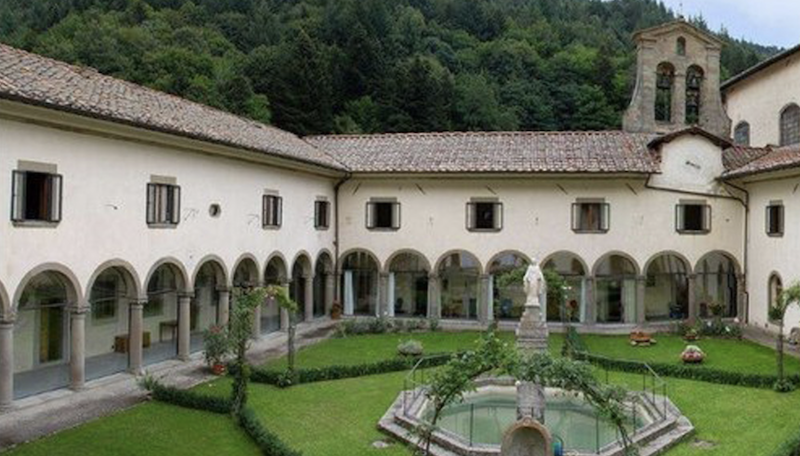
In 1965, the declaration Nostra Aetate (“In Our Time” in Latin) dramatically changed the Catholic Church’s approach to non-Christian religions, dedicating a specific section to Judaism. Antisemitism has no theological basis, the document declared. Sixty years later, where is interfaith dialogue headed and what can and should still be done? These were the themes of the 45th edition of Colloqui ebraico-cristiani (Jewish-Christian Dialogues), which took place from December 4 to 8 at the Camaldoli community, a Benedictine monastery in Tuscany. “Coherence and concreteness. This is the synthesis of all possible tools,” said Noemi Di Segni, president of the Union of Italian Jewish Communities (UCEI). She made these remarks at the start of the second day of the conference, which featured Catholic scholar Milena Santerini and the Israel Ambassador to the Holy See, Yaron Sideman.
Di Segni emphasized that coherence is a prerequisite. Ignoring Jewish sources and the histories of the Land and the State of Israel means surface and giving in to give in to “superficial and quick information.” She said that coherence in fighting antisemitism is “a responsibility towards the context one lives in, not solely for the theological reason of acknowledging the other.” Di Segni mentioned the ongoing collaboration between UCEI and the Italian Episcopal Conference (CEI) to create a collection of fact sheets designed to educate young readers about Judaism. She also emphasized the importance of updating texts and canons coherently. Specifically, she recalled scholar Elèna Mortara’s appeal to Pope Francis to revise an article of canon law that to this day makes forced baptisms of children lawful in the eyes of the Church, even if they are the children of non-Catholic parents. Rabbis, priests, and intellectuals also discussed the meaning of Nostra Aetate, the resistance it encountered, the deconstruction of traditional anti-Judaism, and its new forms and perspectives of collaboration.
Rabbi Roberto Della Rocca emphasized that Holocaust remembrance is an area in which interfaith dialogue is not only possible, but also urgent. He said that “the Shoah is a Jewish tragedy, but it is still somehow a Christian wound as anti-Judaism has had theological roots.” The rabbi emphasized that remembering does not mean cultivating infinite guilt, but rather being vigilant so that the mechanisms that led to that catastrophe—dehumanization, propaganda, and the silence of consciences—will not be repeated, perhaps against others.