
Mikveh and Jewish Quarter, the Jewish Roots of Siracusa
Siracusa was one of the first cities in eastern Sicily to welcome Jews. They settled on the island of Ortigia in the early centuries of the Common Era and lived in relative harmony with the Christian majority until the 1492 expulsion decrees. After these were issued, “living” Judaism was uprooted from Siracusa, as it was from the rest of the Spanish domains. Over time, even awareness of their once flourishing presence disappeared.
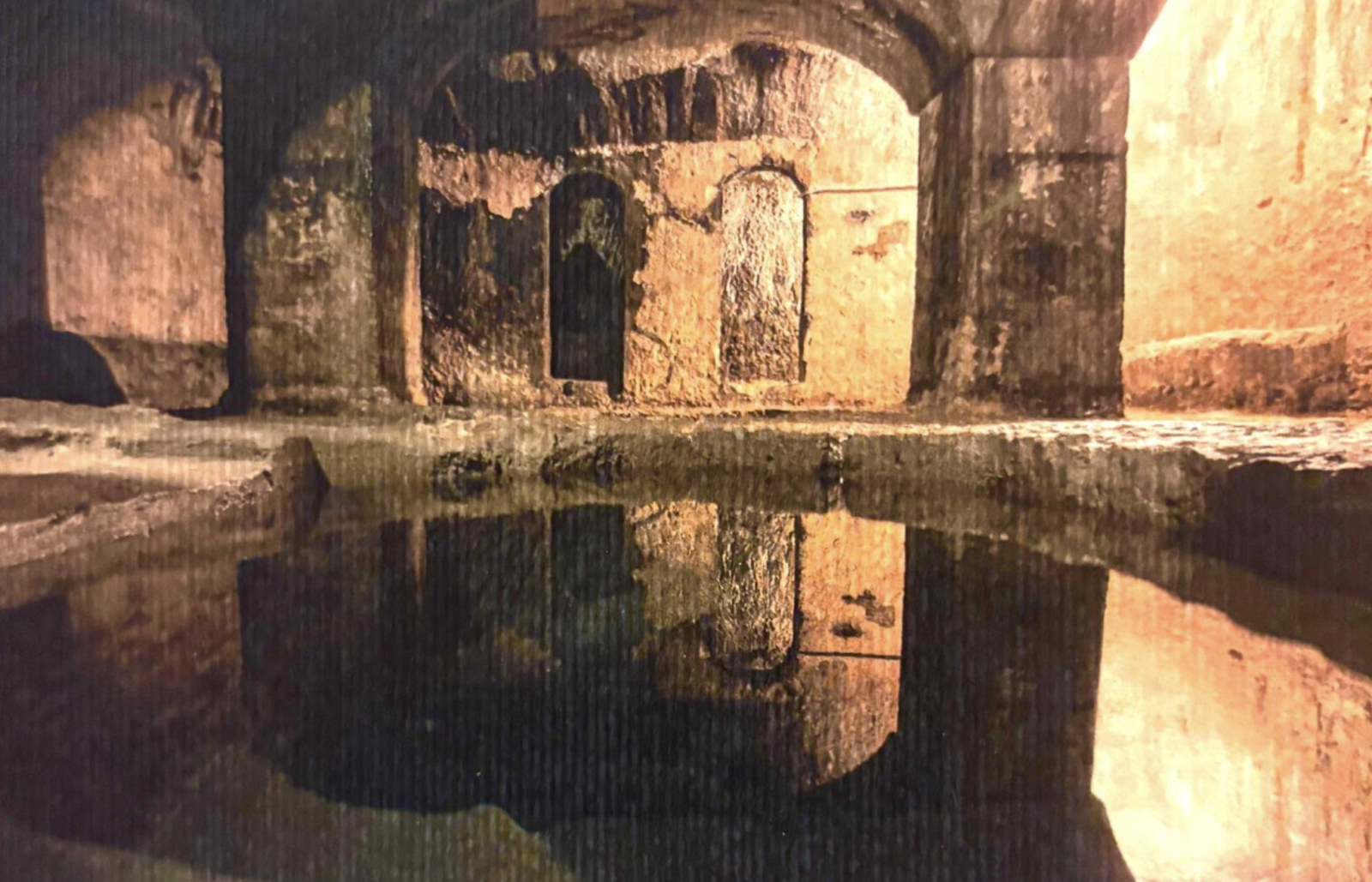
For nearly forty years, Amalia Daniele di Bagni has been on a mission to rediscover and promote this heritage. She is a local noblewoman who discovered an ancient mikveh (ritual bath) in 1986. The mikveh was found during the renovation of a building. This discovery led to the redesign of the entirely forgotten Jewish quarter and brought to light many other traces of Jewish life. These include houses taken over by the Jesuits, remains of synagogues, and even the slaughterhouse.
She writes about this history in her book La Giudecca del ’400 (The 1400s Jewish Quarter), which was presented at Palazzo Vermexio at an event promoted by the UCEI, among others, and the Catania Section of the Jewish Community of Naples. “The discovery of the ritual bath was a revelation and an emotion,” she said. “Especially when, twelve meters below ground level, the ancient Byzantine vaults emerged from the mud. My body reacted with three days of fever,” she recounted. Driven by civic passion and the desire to fill in historical gaps, she has since begun researching and taking action to restore every element to its place, going where archaeologists and scholars had not gone before.
The book presentation was an opportunity to review some of these discoveries. “There are moments when coming together and rediscovering oneself is a harmonious journey,” said UCEI President Noemi Di Segni. She expressed her appreciation for Mayor Francesco Italia’s and the municipality’s support, as well as for their granting of patronage. Di Segni emphasized that “the discovery of an underground site of worship and archaeological remains that testify to the Jewish presence in Siracusa should be a source of pride and inspiration.”
UCEI Vice President Giulio Disegni agreed. He praised the author’s commitment as a self-taught scholar and her efforts to “give back” her work to the community. Moshe Ben Simon, delegate of the Catania Section, organized a meeting between several community members and the UCEI leadership. He emphasized the importance of maintaining “a living flame of Jewish life” and promoting Jewish culture from historical and contemporary perspectives. The presentation featured three lectures on Jewish Siracusa. The speakers were Giuseppe Michele Agnello, a former professor of medieval history at the University of Catania; Salvina Fiorilla, a medieval archaeologist; and Giorgio Gabriele, a civil engineer.
a.s
Translated by Matilde Bortolussi and revised by Alessia Tivan, students at the Advanced School for Interpreters and Translators of the University of Trieste, trainees in the newsroom of the Union of the Italian Jewish Communities – Pagine Ebraiche.