
Santerini: “The Memory of the Shoah Under Attack. No To Comparisons with Gaza”
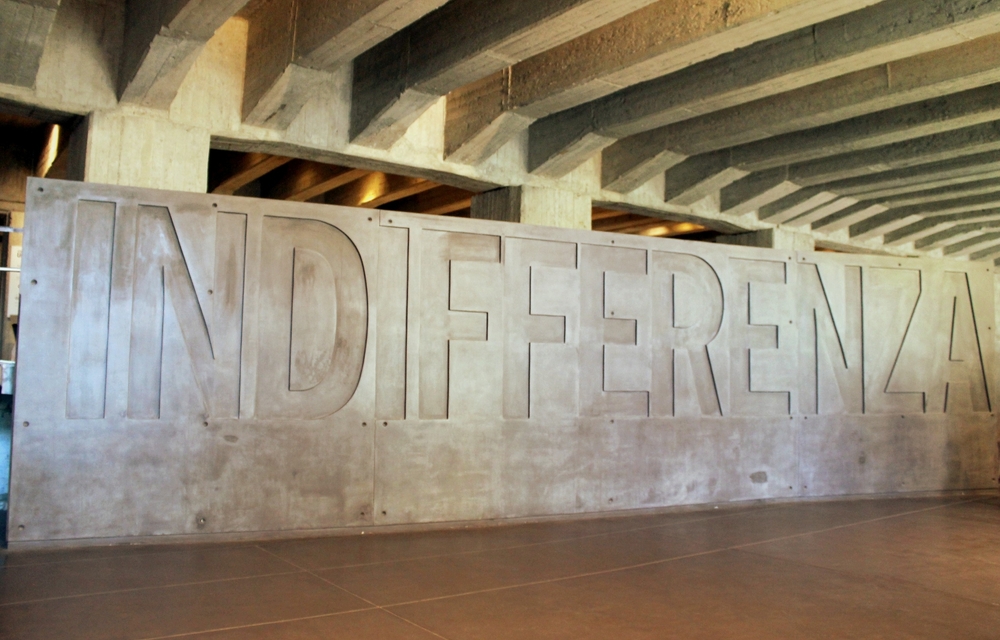
“As January 27 approaches, I am worried. The memory of the Shoah is under attack, and antisemitism is on the rise. We need answers,” Milena Santerini, vice president of the Milan Shoah Memorial Foundation, told Pagine Ebraiche. As the debate over the antisemitism bill presented by Democratic Party Senator Graziano Delrio continues to divide the political and cultural landscape, Santerini is cautious about the need for a new law. “Personally, I would not have introduced it. But, once the majority decided to move forward, the law should follow precise guidelines.” According to Santerini, a professor of Pedagogy at the Catholic University, the bill should strengthen the National Strategy Against Antisemitism. This means combating online hatred, working in schools and universities, improving data collection, and ensuring the security of Jewish sites.”
She said that what would be wrong is “turning the IHRA definition into a rigid reference to be directly applied at the legal level.” This is also true because the definition “is not binding, and if misused, it could end up targeting legitimate criticism of the Israeli government.” “When I was National Coordinator Against Antisemitism, the goal was not to use that definition as a punitive tool. The aim was to develop a broad strategy capable of addressing anti-Jewish hatred in all its historical and contemporary forms.” “Claiming that the Delrio bill intends to ‘use’ the IHRA definition to silence opinions on Israel is incorrect. It is a false claim,” she added.
Looking ahead to Holocaust Remembrance Day, Santerini fears that the climate may deteriorate. “Empathy is being taken away from the victims of the deportations of that time in the name of exclusive sympathy for the Palestinian people. This is unacceptable.” She stressed the need to avoid inappropriate analogies. “One cannot equate the Shoah with the war in Gaza or with other conflicts. The Holocaust carries an intentionality of extermination that must be acknowledged. It has a specific and unmistakable nature that must be recognized. This is not to sacralize it, but rather to understand its historical and universal significance, and to draw lessons from it for the present.”
The vice president of the Milan Shoah Memorial denounced the growing distortion of memory. This includes the use of the yellow star during the pandemic, parallels drawn between deportation and contemporary conflicts, and certain narratives about Gaza that “have fueled improper comparisons.” This is not, she said, about denying others’ suffering. “It is about remembering the foundation on which the machinery of extermination during World War II was built.” She added that this has also occurred with “certain narratives about October 7.”
The risk, the scholar concluded, is that the abuse of the Shoah metaphor will empty it of its meaning. This would weaken public memory and its civic function.
Daniel Reichel
Translated by Matilde Bortolussi and revised by Alessia Tivan, students at the Advanced School for Interpreters and Translators of the University of Trieste, trainees in the newsroom of the Union of the Italian Jewish Communities – Pagine Ebraiche.