
Hebrew: Not Just a Sacred Language
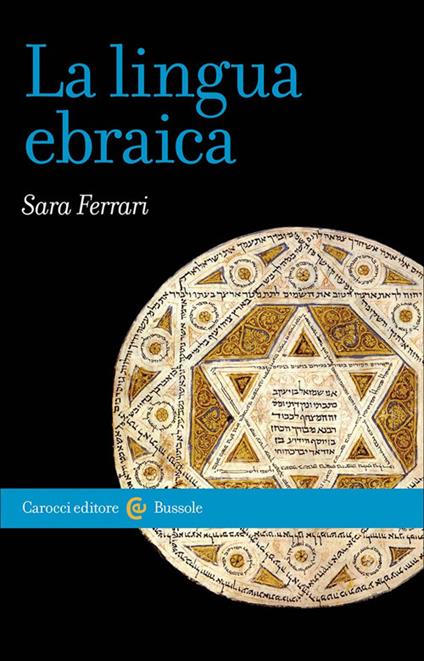 La lingua ebraica (The Hebrew Language) by Sara Ferrari is a journey into the memory of a people and the destiny of a language that, as the author writes, “lived twice.” Hebrew is “the street language of God,” in the words of the poet Yehuda Amichai quoted at the beginning. “Once sacred, now everyday, the language is always alive in its oscillation between the eternal and the changeable,” Ferrari explains.
The book alternates between history, culture, and linguistics. It guides readers through the foundations of Hebrew grammar. At its core lies the identity-shaping meaning of the language. “What do we talk about when we talk about Hebrew?” Ferrari, a professor of Hebrew language and culture at the University of Milan, asks in the opening pages. Hebrew is the language of the Bible and of prayer. It is also the language of the Zionist revival and the modern state. Its “resurrection” was not an instant miracle. Rather, it was a long process of secularization and political construction. “It was not about bringing a dead language back to life, but about explaining the domains in which it was used.”
Ferrari devotes ample space to the dual status of this language, both sacred and profane. From Lashon ha-Qodesh, Hebrew for “language of holiness,” to the language of text messages and Israeli advertising, Hebrew demonstrates a continuity that spans the Jewish diaspora and the return to Israel.
In the central chapters, the scholar reconstructs how the Jewish people “inhabited” the language during the centuries of exile through study, liturgy, and hybrid languages such as Yiddish and Ladino.
Thus, the 20th-century revival becomes a symbolic act. “Ivri, daber ivrit!” (“Hebrew [i.e. Jew], speak Hebrew!”), the motto of Eliezer Ben-Yehuda, encapsulates the idea that the language could recreate the nation.
This is the political key of the book. Alongside historical and cultural analysis, the author provides a clear overview of Hebrew morphology based on triconsonantal roots and vocalic patterns that generate words and meaning, striking a balance between structure and invention. The book concludes by reminding us that “language belongs to the mouths that use it daily.” It is an invitation to view Hebrew not only as a linguistic code, but also as a means of cultural survival.
In the final pages, Ferrari notes that the events of October 7, 2023 have impacted the language as well. Hebrew has reacted “in multiple forms, including the creation of terminology applied to the specific situation of war and attempts to verbally translate the emotional experiences of citizens, including the processing of trauma.” Euphemisms, such as matzav (“the situation”), and dysphemisms that divide society, (the “occupied” or “liberated” territories), show that even today “naming things remains a political and moral act.” These terms also reveal the extent to which language continues to be a symbolic and civic battleground for Israel.
Translated by Alessia Tivan and revised by Matilde Bortolussi, students at the Advanced School for Interpreters and Translators of the University of Trieste, trainees in the newsroom of the Union of the Italian Jewish Communities – Pagine Ebraiche