
Farewell to Marta Petrusewicz, Historian of Southern Italy
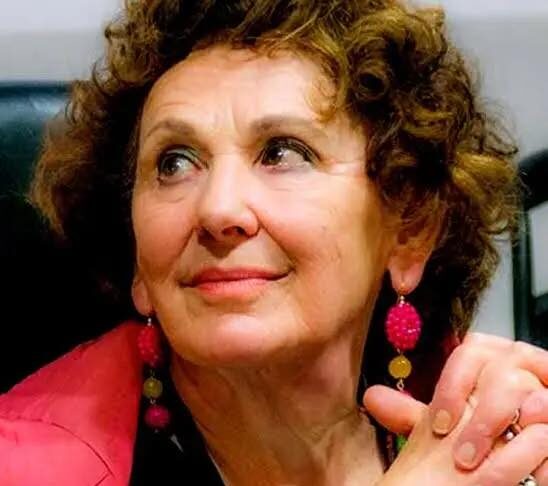
From Warsaw under the Communist regime to the discovery of Southern Italy. From lecturing at American universities to academic and civic engagement in the Calabria region. This was the human and intellectual journey of Marta Petrusewicz, an internationally renowned historian who passed away on February 4 at the age of 77.
A professor at the University of Calabria and the City University of New York, Petrusewicz was one of the most prominent scholars of the economic and social history of Europe’s peripheries. Born in Warsaw, she left Poland in 1969 amid an increasingly repressive political climate. After beginning her studies in history in the Polish capital, she said, “The authoritarian drift of Communist rule forced me to leave the country. The worst possible combination had emerged: nationalism and antisemitism together,” she told the Sicilian Post.
A Jewish young student, she found refuge in Italy and continued her studies in Bologna at a time when “for everyone I was ‘the Polish woman,’ and even the idea of internationalization was still quite distant.” She discovered Southern Italy shortly after graduating when she decided to join the project to build the newly founded University of Calabria at the invitation of rector Beniamino Andreatta. “I took up the challenge with enthusiasm, taking part in one of the most interesting adventures of my life. And so, I married the South.”
From that moment on, the Mezzogiorno became the focus of her historical research and cultural commitment. Meanwhile, Petrusewicz developed an international academic career, teaching at some of the most prestigious American universities, including Harvard and Princeton, as well as the City University of New York, for over twenty years. Despite her strong bond with New York City — “It is the city I love most, and in a sense, the center of the world” — she chose to permanently return to Calabria toward the end of the 2000s.
Her studies helped renew interpretations of the history of Southern Italy and European peripheries, her colleagues emphasized. Her best-known works include Latifundium: Moral Economy and Material Life in a European Periphery, which has been translated into several languages and has received international awards, as well as Come il Meridione divenne questione (How Southern Italy Became an Issue), which was published by Rubettino and is dedicated to the cultural and political construction of the image of the South.
Petrusewicz also illuminated the historical and cultural connections between Southern Italy and the Jewish world. She shed light on an under-explored aspect of the relationship between Southern Italy, the Jewish diaspora, and European history.
Over time, she complemented her academic work with direct involvement in cultural policy. As culture councilor for the Municipality of Rende in the province of Cosenza, she contributed to the development of the Museo del Presente (Museum of the Present) and supported its growth as a space for dialogue on historical memory, social change, and intercultural exchange.
“When the mayor asked me to serve as councilor, I hesitated for a moment,” she confessed before deciding to engage with politics at the local level. “I experienced firsthand how difficult it is to put the slogan ‘culture as a driver of development’ into practice. To make it happen, a kind of cultural revolution is necessary.”
Translated by Matilde Bortolussi and revised by Elizabeth El Khoury, students at the Advanced School for Interpreters and Translators of the University of Trieste, trainees in the newsroom of the Union of the Italian Jewish Communities – Pagine Ebraiche.