
From Ostia Antica to Valdirose, New Jewish Heritage Projects Underway
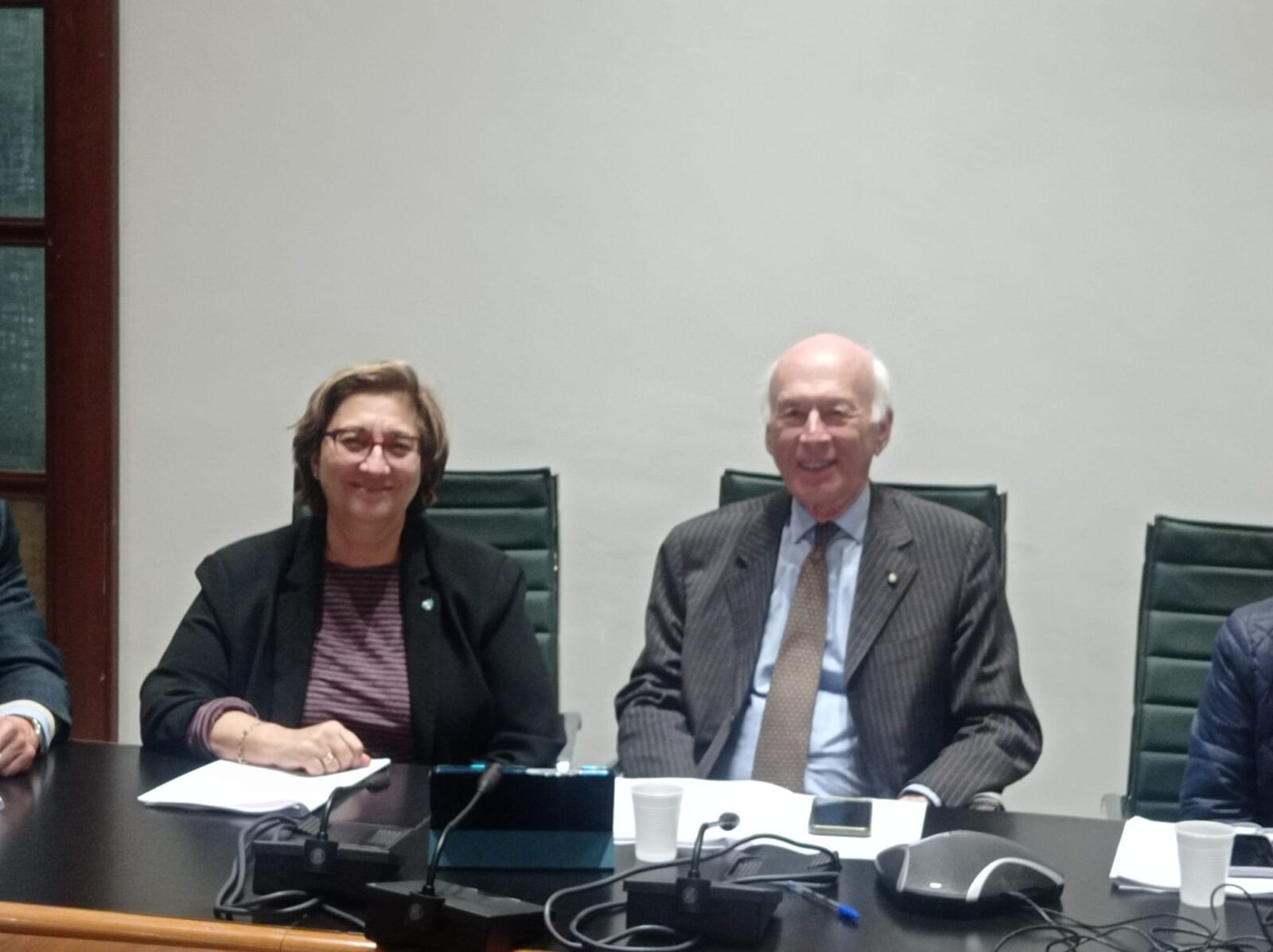
The Italian Ministry of Culture approved funding for the restoration of the Ostia Antica synagogue. The Slovenian Superintendency granted authorization to begin restoration work at the Valdirose Jewish cemetery in Nova Gorica. An agreement was also signed with the Leo Levi Center for musical research. These developments were announced by Dario Disegni, president of the Foundation for Jewish Cultural Heritage in Italy (FBCEI), at a Foundation Council meeting in Rome.
Among the central issues is the reactivation of funding channels for the restoration of Jewish heritage sites through the Joint State-UCEI Commission after years of substantial inactivity.
Disegni explained that, in recent months, the Foundation has been collecting, assisting, and coordinating projects from various Italian Jewish communities to facilitate the submission of funding requests to the relevant authorities. “This opens very important possibilities for the recovery of Jewish cultural heritage,” the FBCEI president emphasized, recalling how the sector had long been stalled.
During the meeting, it was announced that the Ministry of Culture had granted funding for the restoration of the Ostia Antica synagogue, which is located in Rome’s ancient port. Another update concerned the Jewish cemetery of Valdirose in Nova Gorica, which finally received authorization from the Slovenian Superintendency to begin restoration work. “After all the preparatory work, the project can begin very soon,” Disegni noted.
During the session, an agreement was also signed between the Foundation and the Leo Levi Center for the Study of Jewish Liturgical Heritage in Florence, which was represented by its president, Rabbi Joseph Levi. The agreement concerns collaboration between the two institutions on Jewish musical and liturgical heritage, a sector recently entrusted to the Foundation by the Union of Italian Jewish Communities.”
The FBCEI president also highlighted the Foundation’s growing institutional recognition, citing its inclusion in the Ministry of Culture’s three-year funding roster and its registration in the list of cultural institution in the Lazio Region. Another recent development is its admission to AICI (the Association of Italian Cultural Institutions), which brings together the country’s leading cultural organizations.
Significant attention was devoted to the activities of the National Library of Italian Judaism, which was entrusted to the Foundation by UCEI. It is a “truly major commitment” in terms of cataloging, digitization, and cultural activities, including conferences, meetings, and presentations. The “I-Tal-Ya books” project is also nearing completion, with 30,000 volumes of Italy’s Jewish literary heritage already catalogued. “We would like to organize an important event with the National Central Library of Rome to showcase the work,” the president of FBCEI announced.
UCEI president Livia Ottolenghi also attended the meeting and reaffirmed the importance of close collaboration between the Union of Italian Jewish Communities and the Foundation. This commitment, Disegni concluded, takes on particular significance at a historical moment marked by a strong wave of antisemitism. “Making Italy’s Jewish heritage better known is certainly a very important tool for countering this dangerous trend.”
d.r
Translated by Caterina Mansani and revised by Elizabeth El Khoury, students at the Advanced School for Interpreters and Translators of the University of Trieste, trainees in the newsroom of the Union of the Italian Jewish Communities – Pagine Ebraiche.